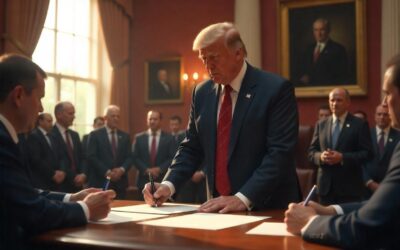
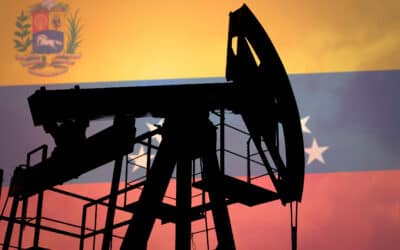
Denying authorization to Chevron and other American oil companies in Venezuela will only create a vacuum that will be filled by countries hostile to the United States.
The Center is a gathering of scholars, experts and community stakeholders, that engage in research and dialogue in an effort to create practical policy recommendations and solutions to current local, national, and international challenges.
Denying authorization to Chevron and other American oil companies in Venezuela will only create a vacuum that will be filled by countries hostile to the United States.
Members of the MB were caught planning sabotage activities in Amman. Jordan’s interior minister Mazin al-Farrayeh, declared a total ban on the group in a press briefing, saying that “any activity by the group, regardless of its nature, is considered a violation of the law”. He also emphasized that “affiliation and any interaction with the group is now banned and that promotion of its & ‘ ideology ‘ will result in criminal prosecution.”
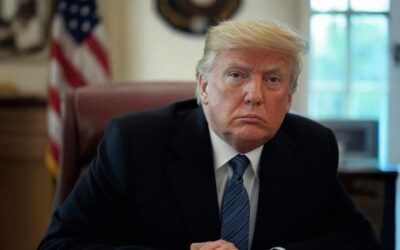
The term “deep state” has been repeatedly heard since Donald Trump was first elected president in 2016. In this view, the “deep state” has been interpreted to mean the federal agencies of the executive branch composed of unelected bureaucrats standing in the way of presidential policies.
The U.S. Campaign Must Combine Military Force, Aggressive Diplomacy, Economic Warfare, and Influence Operations
In late January, U.S. Secretary of State Marco Rubio wrote in the Wall Street Journal that Trump’s America First policy pays close attention to the Western Hemisphere. Rubio claimed that previous administrations have overlooked Latin America, and he pledged things would be different from now on.
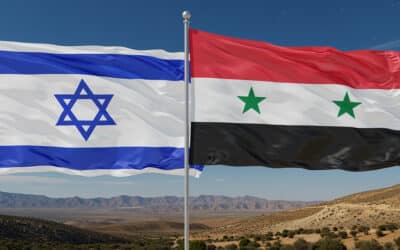
The fall of the Assad regime, which was the downfall of a political ideology- Ba’athism, and a minority community -the Alawis, can be somewhat connected to the overall fallout from the events of 7 October and their aftermath. Indeed, the timing of the events in Syria was greatly influenced by the smashing [though not final] defeat inflicted by Israel on Hizballah directly and indirectly on Iran. The Sunni opposition in Syria timed its final assault on the regime, which was in the making for many months, to the weakness of Iran, whose support to the Assad regime was crucial.
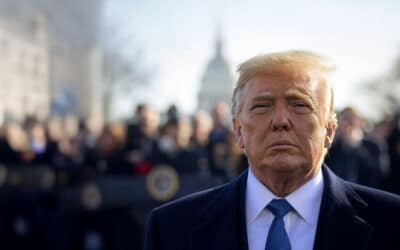
As Donald Trump takes the oath of office and prepares to begin his second term as President of the United States, America stands at a pivotal crossroads in its history. The nation must decide whether to continue its post-World War II tradition of cautious global leadership under the pretense of partnership and cooperation or to openly embrace its role as the dominant force shaping the destiny of the world.
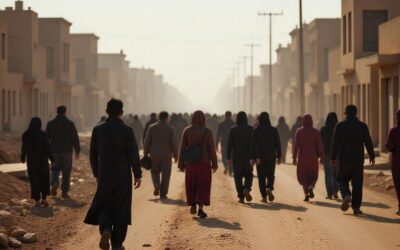
We have recently witnessed the collapse of Syria’s decades-long, oppressive regime.
There is room for the people of Venezuela and the U.S. administration to learn something from the Syrian experience and consider applying its lessons to the Maduro regime.
Syria’s quick collapse is widely attributed to the weakness of the powers that sustained the Bashar al-Assad regime and to the well-armed and well-organized opposition forces.
Now that President Donald Trump has won a second term, he has the opportunity to reorient U.S. Middle East policy from that of President Joe Biden. Out is Biden’s appeasement of Iran. In is “Maximum Pressure.” Out is demonization of Saudi Arabia. In is Trump’s partnership with Crown Prince Mohammed bin Salman. Out is the Biden administration’s passive-aggressiveness toward Israel; in are close ties with Israeli Prime Minister Benjamin Netanyahu.
“Iran poised to strike U.S. from Venezuela with acts of terror”
www.floridianpress.com
Enter your mail to receive monthly updates, events and recaps.
The Center is a gathering of scholars, experts and community stakeholders, that engage in research and dialogue in an effort to create practical policy recommendations and solutions to current local, national, and international challenges.
EXPLORE THE CENTER
FOCUS AREAS
©2025 The Palm Beach Center for Democracy and Policy Research. All Rights Reserved