
The Venezuelan Regime’s Criminal Architecture: Drug Trafficking, Foreign Alliances, and Institutional Collapse —Part I
Photo Credit: Grok
From: www.dialogo-americas.com/
The Venezuelan Regime’s Criminal Architecture: Drug Trafficking, Foreign Alliances, and Institutional Collapse —Part I
By Luis Fleischman
In this exclusive interview with Diálogo, Luis Fleischman, an expert in international relations, sociology professor at Palm Beach State College, and founding co-chair of the Palm Beach Center for Democracy, reveals the complex and murky criminal architecture that sustains the Nicolás Maduro regime. With a highly detailed perspective, Fleischman describes how Venezuela went from being an oil power to becoming the hub of a regional drug trafficking network.
Based on his critical analysis of the evolution of criminal power in Venezuela, Fleischman exposes the deep symbiosis between the state, the military, and powerful criminal networks, as well as the decisive role of the Orinoco Mining Arc, the Cartel of the Suns, and alliances with armed groups such as the National Liberation Army (ELN) and dissident factions of the Revolutionary Armed Forces of Colombia (FARC). His assessment paints a picture of a fully consolidated narco-state, whose criminal operations not only sustain the regime but also pose a direct threat to the stability and security of the entire region.
Diálogo: You have stated that the Nicolás Maduro regime now depends more on criminal economies, especially drug trafficking, than on oil. What is the strongest evidence that illicit income has become the main source of financing for the political and military elites in Venezuela? And, under this logic, what criteria and indicators allow Venezuela to be defined as a narco-state?
Luís Fleischman, expert in international relations and founding co-chair of the Center for Democracy in Palm Beach: The evidence comes from numerous reports documenting how the Nicolás Maduro regime is sustained by drug trafficking and its cooperation with criminal organizations. Analysts, international organizations, and testimonies, such as that of former [Venezuelan] intelligence chief Hugo “El Pollo” Carvajal, have consistently described these practices.
To understand this phenomenon, one must look at the collapse of the Venezuelan economic model. The severe deterioration of PDVSA, coupled with international sanctions on the energy industry, left the regime with virtually no legal income. That void was filled by illicit economies, especially drug trafficking, which are not affected by sanctions and provide constant cash flows. At the same time, these resources allow the regime to build networks of loyalty within the military and other power structures.
For these reasons, multiple reports and international agencies now describe Venezuela as a narco-state. Oil sanctions have not weakened the regime because it has taken refuge in the criminal economy. Therefore, other types of international pressure will be needed to have a real impact on its sustainability.
Diálogo: Illegal mining in the Orinoco Mining Arc has also become a crucial source of income for the regime. What does the militarization of this area reveal about the fusion between the state, armed groups, and criminal actors? And what are the implications for regional security and public health?
Fleischman: Illegal mining is fundamental to the regime’s survival. Not only does it generate income, but it also acts as a mechanism for political and economic cohesion that guarantees the loyalty of the military in particular. This model is not unique to Venezuela; there are parallels in other countries where the military de facto co-govern large sectors of the economy. In Venezuela, it operates under the same logic.
This scheme explains why there is no significant dissent within the [Venezuelan] National Armed Forces. In addition to economic incentives, the military is subject to constant surveillance, a common practice in authoritarian regimes. Leaders such as Franco in Spain and Pinochet in Chile also closely monitored their own militaries to prevent conspiracies and maintain control.
The situation is even more worrying because the activity is not only illegal due to its extractive nature, but also because of the brutal conditions in which it operates. There are reports of labor exploitation and forms of slavery under overseers linked to former members of the FARC and the ELN. Added to this is the profound environmental devastation and the effects on the health of nearby communities. But for the regime, the priority is to stay in power, and illegal mining, despite its human and environmental impact, has become a key source of resources to sustain itself in power.
Diálogo: One of the most cited structures in this criminal ecosystem is the Cartel of the Suns, described as the criminal backbone of the regime. Recognizing the established fusion between the state and crime, what evidence best illustrates the daily operational centrality of this network? And how important is the Cartel of the Suns to the longevity and functioning of the Maduro regime?
Fleischman: The so-called Cartel of the Suns involves high-ranking Venezuelan military officers. The name comes from the suns worn on the uniforms of the highest-ranking officers. Numerous reports have pointed to the involvement of the military in this network, with particular mention of Diosdado Cabello, who is now one of the regime’s main operators of repression.
This cartel plays a central role in the regime’s survival because it is deeply involved in drug trafficking. As members of the military, these actors are essential in providing political and operational support to the regime. Under this scheme, a relationship of mutual protection is established, where the regime protects the military involved and they, in turn, support and safeguard the regime.
Now, with the recent designation of the Cartel of the Suns as a foreign terrorist organization, the door is open to more forceful mechanisms of persecution, including military ones.
Diálogo: The regime’s alliances with structures such as the ELN, FARC dissidents, and the Tren de Aragua have spread throughout the region. Are we facing a new criminal bloc with Venezuela as its coordinator?
Fleischman: What exists today is an international criminal network. Venezuela is not necessarily the only command center, but it is an essential actor that facilitates operations, logistics, and political expansion.
Since the Chávez era, the country has supported ideologically aligned movements and governments. Today, that projection is combined with a much more evident criminal component. Venezuela has become the main corridor for cocaine produced in Colombia and Peru, offering ports, airports, and land routes that function as a logistical infrastructure at the service of the cartels. At the same time, it exports its political model and strengthens populist and authoritarian governments or movements that, through complicity or institutional collapse, end up facilitating the expansion of drug trafficking.
The corruption associated with these illicit economies destroys states from within, and this institutional weakening opens the door to external influences such as Russia, China, or Hezbollah, whose presence in the region is widely documented.
In short, drug trafficking acts like a cancer that corrodes the state. And although Venezuela does not exercise direct control over other democratic countries, drug trafficking does. The permissiveness, and in many cases the collaboration, of the Venezuelan regime amplifies that reach, seriously affecting regional security throughout Latin America and the Caribbean.
Diálogo: How has the Venezuelan regime coordinated cooperation with armed groups and criminal networks with the export of its political project, becoming a destabilizing actor in the region?
Fleischman: Venezuela today plays a role that goes beyond its borders, and not only for economic interests. Since the time of Hugo Chávez, the government has defined itself as a revolutionary state with a regional influence. In this context, it provided political and ideological support to groups such as the FARC at the time and the ELN, which it saw as subversive forces useful for putting pressure on other countries whose leadership was rejected by Caracas.
An example of this was the documents seized from the FARC in a Colombian operation on Ecuadorian territory, which revealed how these groups collaborated in subversive efforts in countries such as Bolivia and Paraguay and coordinated with local organizations to expand their political and ideological influence. This shows that Venezuela has functioned as an epicenter not only for drug trade and trafficking, but also for the dissemination of an ideology and political model, initially promoted by Chávez and then continued by Maduro, aimed at influencing the region.
In this sense, it could be said that there is a two-pronged approach. On the one hand, actors linked to drug trafficking operate freely, and on the other, a regime seeks to project a political and ideological agenda in Latin America.
PART II
In the second part of this interview, Fleischman examines how the regime’s architecture transcends the Western Hemisphere and delves deeper into the strategic alliance with Iran, the growing penetration of extra-regional actors such as Hezbollah, and the dangerous ramifications of identity laundering that today threaten the security of the entire continent.
About the Author
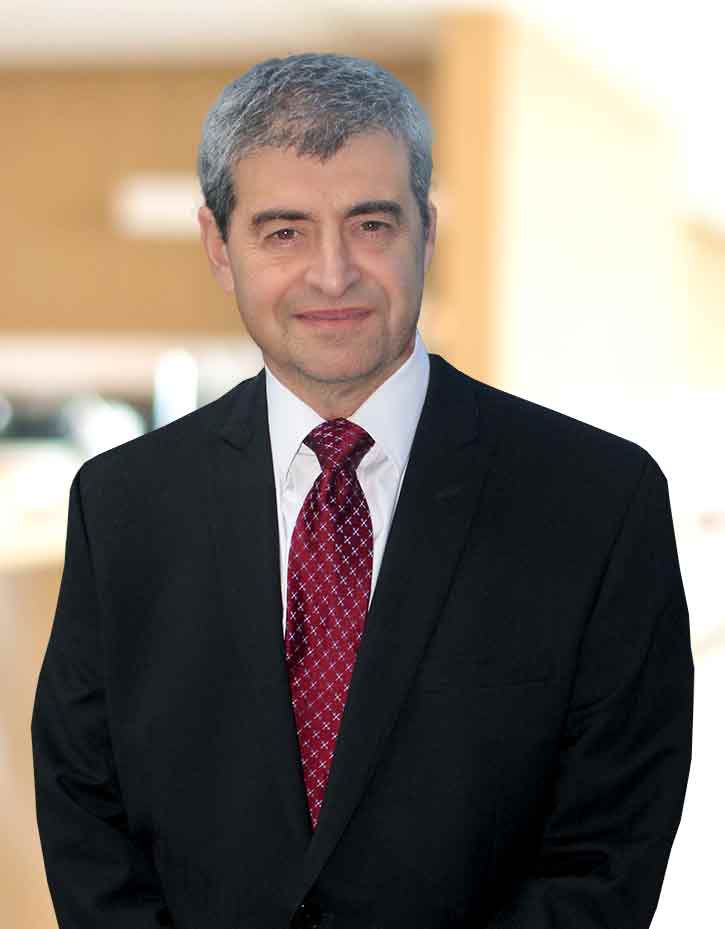
Luis Fleischman
CO-FOUNDER, CONTRIBUTOR AND BOARD MEMBER
Luis Fleischman, Ph.D is a professor of Sociology at Palm Beach State College. He served as Vice-President of the Jewish Community Relations Council of the Jewish Federation of Palm Beach County, and as a Latin America expert at the Washington DC –Menges Hemispheric Project (Center for Security Policy)
Related Articles
Two Defining Moments: Reflecting on 9/11, October 7, and the Challenges Ahead
Two Defining Moments: Reflecting on 9/11, October 7, and the Challenges Ahead
Join us for an important discussion on the state of global terrorism today, the lessons learned from those events and how the world perceives current threats.
October 7 and the Yom Kippur War: My Personal Wound
For as long as I can remember, the large photograph of a handsome young man, with a camera resting on his shoulder, hung on the wall in my grandmother’s bedroom, seeming to look right at me. The photograph remained there until the last day of her life.
The Power of Anti-Zionism in the United States: A Gradual Hegemony Building
Building on Antonio Gramsci’s framework, this paper analyzes the hegemonic
consolidation that has led to the emergence of a strong anti-Zionist historic bloc.
It reinterprets the notion of a historic bloc not through the traditional Marxist
perspective of class hegemony, but rather through the prevalence of a resolute
Palestinian narrative.

The Center is a gathering of scholars, experts and community stakeholders, that engage in research and dialogue in an effort to create practical policy recommendations and solutions to current local, national, and international challenges.
EXPLORE THE CENTER
FOCUS AREAS
©2025 The Palm Beach Center for Democracy and Policy Research. All Rights Reserved