
The Venezuelan Regime’s Criminal Architecture: Drug Trafficking, Foreign Alliances, and Institutional Collapse — Part II
Photo Credit: Grok
From: www.dialogo-americas.com/
The Venezuelan Regime’s Criminal Architecture: Drug Trafficking, Foreign Alliances, and Institutional Collapse —Part II
By Luis Fleischman
In the first part of this interview, Luis Fleischman, an expert in international relations, sociology professor at Palm Beach State College, and founding co-chair of the Palm Beach Center for Democracy, revealed the criminal roots that sustain the Nicolás Maduro regime and its close collaboration with armed groups and illicit structures operating inside and outside Venezuela.
In this second part, Fleischman expands the map of this criminal network by examining the operational alliance with Iran and the role that countries such as Cuba and Nicaragua play in Tehran’s strategic projection in the Western Hemisphere. His analysis raises alarms about the urgent need for genuine democratic cooperation and to confront, without ambiguity, large-scale criminal structures whose operational capacity exceeds that of many current democratic systems.
Diálogo: You argue that cooperation between Iran and Venezuela is operational. What is the most alarming dimension of Iran’s penetration into the criminal state apparatus of the Maduro regime? What does this partnership allow Iran to achieve that it could not from the Middle East, and what advantages does Iran provide Venezuela in return?
Luis Fleischman, expert in international relations and founding co-chair of the Palm Beach Center for Democracy: It is important to understand that Iran does not control Venezuela, but it does cooperate closely with the regime, and there is a deep ideological affinity between the two. For years, Iran was subject to international sanctions, and in that context, it took advantage of its relationship with Venezuela to evade them through banking cooperation, covert financial operations, and oil transactions that helped Caracas circumvent restrictions.
But beyond that practical collaboration, there is a political and ideological connection. Chávez saw the Islamic Revolution as a sister revolution and admired the doctrine of asymmetric warfare and the use of proxies such as Hezbollah. That model directly influenced the construction of the Bolivarian military doctrine and continues to be in force under Maduro.
Both countries also perceive themselves as states marginalized by the West. That perception has pushed them to align themselves with powers such as Russia and China. Russia, for example, sold weapons to Venezuela that ended up in the hands of the FARC, an episode that fits into the vision of asymmetric warfare that Chávez promoted.
In short, Iran seeks to use Venezuela as a multifunctional platform where sanctions evasion, financial cooperation, oil exchange, and political affinities converge. But above all, it conceives of it as a strategic point from which to project operational capacity should it need to do so against an adversary.
Diálogo: Venezuela provided passports to foreign operatives, facilitating identity laundering. What risks arise when Latin American states replicate Venezuela’s identity laundering strategy for extra-regional operatives?
Fleischman: It is one of the most dangerous precedents that has seriously contaminated regional security. There is evidence that Venezuelan officials, including Tarek El Aissami, granted passports to Iranian citizens involved in illicit operations. With a Venezuelan passport, these individuals were able to enter numerous countries and commit criminal acts, something that has already been documented in Europe. The risk is enormous, as Iran gains access to places where its citizens would face severe restrictions.
The Venezuelan migration crisis further exacerbates this scenario. Among millions of displaced persons, operatives linked to organized crime or terrorism can infiltrate, taking advantage of the willingness of many countries in the region to more readily receive those fleeing the Maduro regime. We are already seeing alarming signs in Uruguay, for example, a country historically untouched by these threats, which has detected the presence of Hezbollah, something unthinkable decades ago.
But today the situation has changed. Although for years many countries were slow to recognize that Venezuela had become a rogue state, today that perception is very different, and Venezuelan passport holders face much greater scrutiny. This precedent has shifted the strategy to other states, especially in the small Caribbean countries, where Iran is reportedly attempting to obtain alternative nationalities.
Collectively, this phenomenon undermines regional security and puts the population of Latin America at risk. Every criminal actor who manages to enter represents a potential threat to the entire region.
Diálogo: How do countries such as Venezuela, Nicaragua, and Cuba facilitate Iran’s strategic and military projection in the Western Hemisphere?
Fleischman: Iran perceives these countries as military and strategic allies. In other words, it considers certain Latin American nations to be operational platforms from which it can project its influence, whether to launch attacks, operate remotely, or carry out actions similar to those of the AMIA, in addition to other subversive or criminal activities. We cannot underestimate Iran as a country whose military industry is one of its strongest pillars. In this context, the incorporation of allies in the region takes on a central role in its military base strategy and makes Iran a growing threat that makes the hemisphere an increasingly relevant target for the achievement of its goals.
Diálogo: What would constitute a real turning point in the confrontation between criminal state actors and the region’s democratic and security architecture?
Fleischman: A democracy can only survive with a strong state. When the state is corroded by organized crime, it becomes fragile. The turning point comes when a democracy directly confronts large-scale criminal structures with an operational capacity that many democratic systems are not prepared to exercise [because conventional methods are often insufficient].
The essential thing is that, even when tough measures are taken, there must be transparency, legality, and judicial oversight. An alliance between democracies is also needed; democracies must cooperate, share intelligence, and not show weakness.
Ultimately, what is needed is a democratic transformation that generates legitimacy, institutional strength, and a real capacity to confront organized crime without renouncing the fundamental principles that sustain democracy.
About the Author
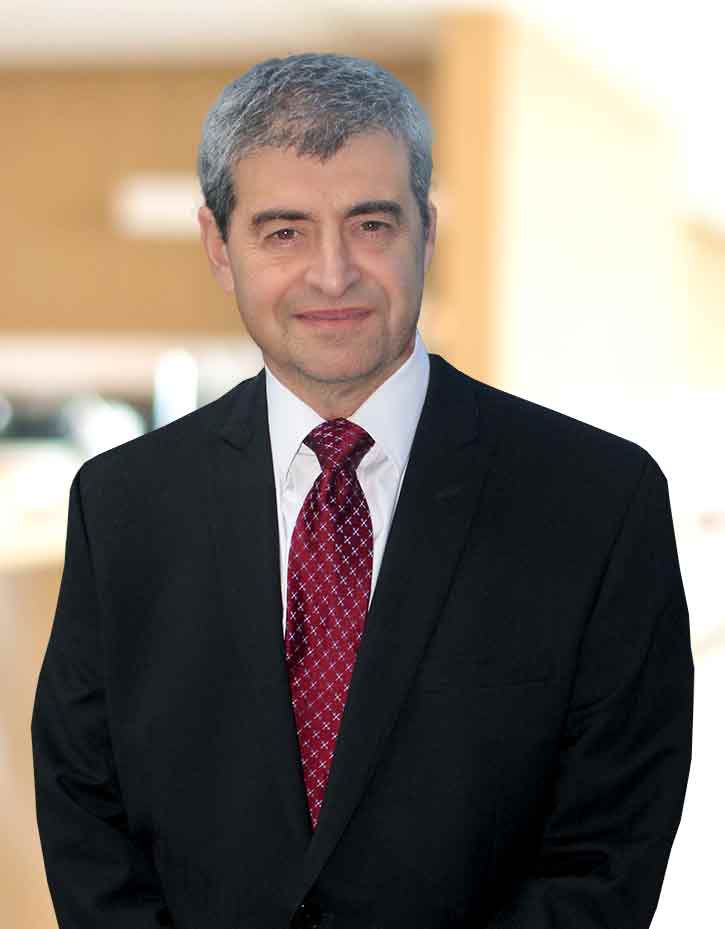
Luis Fleischman
CO-FOUNDER, CONTRIBUTOR AND BOARD MEMBER
Luis Fleischman, Ph.D is a professor of Sociology at Palm Beach State College. He served as Vice-President of the Jewish Community Relations Council of the Jewish Federation of Palm Beach County, and as a Latin America expert at the Washington DC –Menges Hemispheric Project (Center for Security Policy)
Related Articles
Iran’s Record Justifies Military Action Against It
It’s remarkable to witness the level of ignorance displayed by certain public officials, segments of the media, and various analysts when evaluating the rationale behind the joint American–Israeli military operation against Iran.
ICE and Immigration Enforcement Practices: Law, Rights and Lessons Learned
ICE and Immigration Enforcement: Law, Rights, and Lessons Learned.Join us for an important conversation to discuss the current immigration crisis and immigration enforcementFeaturing: Congressman Mark Foleyformer Member of the U.S House of RepresentativesRichard Arpad Hujber, EsqImmigration Attorney and past Chairman of the Immigration Committee for the Palm Beach County Bar Association.Moderator:Dr. Stephen Sussman Co-President, Palm Beach Center for Democracy and Policy Research, Professor of Public Administration.Barry University
For Sake of Iranian People, Foreign Intervention Justified
As with many contemporary challenges, the case for foreign intervention in Iran has a clear precedent: NATO’s intervention in the former Yugoslavia against the regime of Slobodan Milošević.

The Center is a gathering of scholars, experts and community stakeholders, that engage in research and dialogue in an effort to create practical policy recommendations and solutions to current local, national, and international challenges.
EXPLORE THE CENTER
FOCUS AREAS
©2025 The Palm Beach Center for Democracy and Policy Research. All Rights Reserved