
Genocide is a word not to be used lightly
Photo by pvproductions – www.freepik.com
Genocide is a word not to be used lightly
By Norman A. Bailey, Ph.D.
The Russian invasion of Ukraine is a crime under international law and atrocities have been committed, but the Russians are not trying to annihilate the Ukrainian people.
Words matter. Words can and do result in thoughts and then into actions. Words can result in the most laudable of human actions and into the most despicable behavior. Words can inspire and they can mislead. For all these reasons it is of extreme importance that language be used properly, so that inappropriate or counter-productive thoughts and actions do not result.
One word that is being improperly used with great frequency nowadays is the word “genocide”. Genocide has a very specific meaning, defined not only in dictionaries but in international agreements and in international law in general.
Genocide is not a synonym for massacre, atrocity, mass-murder, or any other similar expressions. It has a very specific meaning. Homicide, femicide, regicide, etc. refer to the murder of people; massacre and other similar words refer to the murder of many people. Genocide refers to the attempted annihilation of a people, genetically defined in racial and/or ethnic terms.
Thus, the invasion of Ukraine by Russia is not a genocide. Certainly it is a crime under international law and certainly atrocities have been committed, but the Russians are not trying to annihilate the Ukrainian people – in fact, they claim that Russians and Ukrainians are the same people.
Besides being the month of Holocaust Remembrance Day, April is also the anniversary of the often referred-to Armenian “Genocide” of 1915/16.
The Holocaust involved not six million but about ten million people, only six million of which were subject to “genocide”–obviously the Jewish six million. And the Armenian atrocities were not genocide at all – the Turks were engaging in the forced removal of the Armenian population of eastern Turkey (then the Ottoman Empire) to the Syrian province of the empire, since the Turkish government was afraid that the Armenians – fellow Christians – would support the Russians if Russia invaded from the Caucasus.
Certainly horrific atrocities accompanied the removal, resulting in the deaths of hundreds of thousands of innocent people, but many reached Syria and were settled there.
In fact, although the twentieth century was full of massacres and atrocities of all kinds, there were only two genocides, the Jews of Europe in the 1940s and the Tutsis in Rwanda in the 1990s.
In Cambodia in the 1970s Cambodians slaughtered Cambodians; the millions that were murdered in the Soviet Union and China during the century were massacred by Russians and Chinese.
Using the term “genocide” in all such cases simply depreciates the word and the reality behind it. The world should oppose all atrocities of whatever nature perpetrated wherever, but a genocide is a very special crime, which must be dealt with in a very special way.
Dr. Norman Bailey is professor of Economic Statecraft at the Galilee International Management Institute, and adjunct professor at the Institute of World Politics, Washington DC. Dr. Bailey was a senior staff member of the National Security Council during the Reagan administration and of the Office of the Director of National Intelligence during the George W. Bush administration.
Published by Globes, Israel business news – en.globes.co.il – on April 28, 2022..
About Norman A. Bailey
Norman A. Bailey is an economic consultant, adjunct professor of economic statecraft at the Institute of World Politics, and president of the Institute for Global Economic Growth.
He is an emeritus professor at The City University of New York. He served on the staff of the National Security Council during the Reagan Administration and the Office of the Director of National Intelligence during the George W. Bush Administration.
Mr. Bailey’s degrees are from Oberlin College and Columbia University. He is the author, co-author or editor of several books and many articles.
About the Author
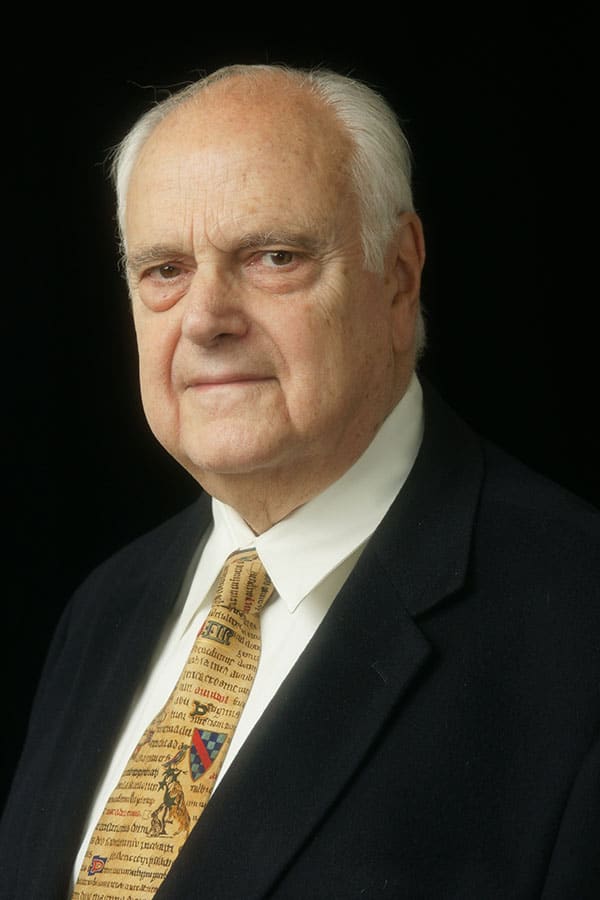
Norman A. Bailey
AUTOR AND CONTRIBUTOR
Norman A. Bailey is an economic consultant, adjunct professor of economic statecraft at the Institute of World Politics, and president of the Institute for Global Economic Growth.
He is an emeritus professor at The City University of New York. He served on the staff of the National Security Council during the Reagan Administration and the Office of the Director of National Intelligence during the George W. Bush Administration.
Mr. Bailey’s degrees are from Oberlin College and Columbia University. He is the author, co-author or editor of several books and many articles.
Related Articles
Two Defining Moments: Reflecting on 9/11, October 7, and the Challenges Ahead
Two Defining Moments: Reflecting on 9/11, October 7, and the Challenges Ahead
Join us for an important discussion on the state of global terrorism today, the lessons learned from those events and how the world perceives current threats.
October 7 and the Yom Kippur War: My Personal Wound
For as long as I can remember, the large photograph of a handsome young man, with a camera resting on his shoulder, hung on the wall in my grandmother’s bedroom, seeming to look right at me. The photograph remained there until the last day of her life.
The Power of Anti-Zionism in the United States: A Gradual Hegemony Building
Building on Antonio Gramsci’s framework, this paper analyzes the hegemonic
consolidation that has led to the emergence of a strong anti-Zionist historic bloc.
It reinterprets the notion of a historic bloc not through the traditional Marxist
perspective of class hegemony, but rather through the prevalence of a resolute
Palestinian narrative.

The Center is a gathering of scholars, experts and community stakeholders, that engage in research and dialogue in an effort to create practical policy recommendations and solutions to current local, national, and international challenges.
EXPLORE THE CENTER
FOCUS AREAS
©2025 The Palm Beach Center for Democracy and Policy Research. All Rights Reserved